



Trip booking for 2025 and 2026 is open, you can book any trip from our website.

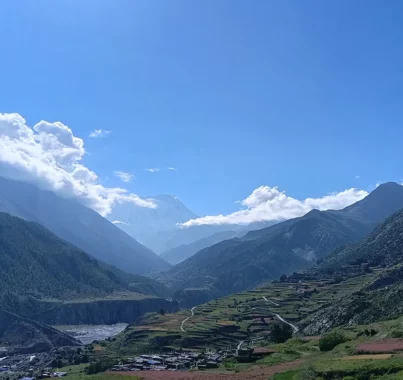
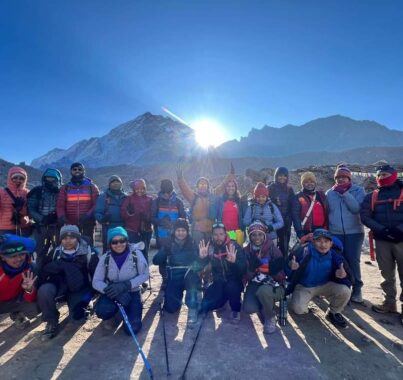
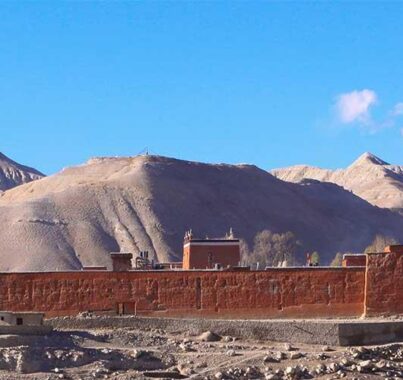

The Upper Mustang region is a trekking trip that offers us many surprises because of its topography, culture, and natural environment, which are quite comparable to Tibet. Its own kingdom, known as the “secret valley over the mountains,” was not accessible to foreigners until 2006. The capital of this area’s sovereign kingdom used to be Lo Manthang. It is one of Nepal’s less well-known and constrained trekking locations. With the help of this thorough guide to the Upper Mustang Trek, you will be able to enjoy the variety of nature, from dense foliage to isolated and alpine settings.
The Upper Mustang Trek is a great monsoon trek and an all-year trekking trip because it is located in the rain shadow of the Himalayas, but because of the heavy snowfall that can make the route impassable, the best time to go is usually from March to November. The Upper Mustang trek is known as “the valley across the mountains” for good reason—it is located in a rain shadow area of the Himalayas aside from the Dhaulagiri massif, so it can be done during the monsoon season as well because clouds rarely form here and bring very little rainfall. During the winter months, however, locals travel to lower altitudes because of the snowfall, and some areas may be impassable.
The Tiji festival is mostly observed during three days in the spring, which typically occurs in May. This joyous occasion is also rooted in a mythological tale about the deity Dorjje Jhomo, who battled the demon king to save the Mustang Valley. The Tibetan term “Ten Che,” which denotes the global prevalence of Buddhism and is observed in the spring, is actually where the word “Tiji” originates. Along its trekking paths, this stunning journey across the hills, mountains, valleys, and sceneries also provides a wealth of spiritual insights.
Enjoy the three-day Tiji or Tenchi festival at Lomanthang while strolling through stunning local communities and Buddhist temples with uninterrupted views of the majestic Himalayas and mountains. In addition to masked men costumed as demons and deities dancing and slashing swords in the air, the festival’s main venue is packed with spectators. During this Tiji festival at Upper Mustang, take in the entire cultural insights while exploring the breathtaking features.
It is strongly advised that you fly from Pokhara to Jomsom and start your trip from there, even if there are other possibilities via jeep. You can have an incredible flying experience when you fly over the Annapurna and Dhaulagiri massifs through the Kaligandaki gorge. After you reach Kagbeni and follow the Kaligandaki River, the trekking adventure officially begins. You will reach Lo Manthang after four to five days of visiting the Mustang region in this manner. You traverse the Himalayan pass, which is at an elevation of around 4,000 meters, along the trekking paths. See the monasteries in Dhakmar and Lo Gekar, where it is said that Guru Rinpoche slain the demon and that the rocky mountain turned crimson from his blood. This journey concludes with a return travel to Jomsom and then on to Pokhara.
The royal palace at Lo Manthang is another important site of importance, in addition to Buddhist temples and shrines and the LoGekar Monastery in Dhakmar. Similarly, additional highlights include the museum in Amchi and the 15th-century Thugchen Gompa. The official physicians of the local King are Amchi, a traditional Mustangi medicinal therapy and practice. This traditional medical practice was also preserved with the establishment of Amchi School. You can also explore the local Buddhist tradition and culture, which has been influenced by Tibetans, visit the neighboring monastery, and rent Tibetan horses or ponies for a journey towards Chhoser.
As Upper Mustang is a restricted trekking area, you must acquire a special permit for Mustang, which costs $500 USD for ten days per person, in addition to your ACAP (Annapurna Conservation Area Project) permit. You must present your permit at the Kagbeni checkpoint in order to enter and exit. All of the trekking permits needed for this trip will be arranged by your neighborhood trekking agency, such as Everest Summit Treks and Expedition. All you have to do is take in and explore Upper Mustang’s hidden valley.
Upper Mustang can be completed entirely on a teahouse basis, just like the majority of other well-known Nepali treks, like Everest Base Camp and Annaupurna Circuit. Simply put, teahouses are the local residences that provide rudimentary lodging and food services. A communal dining area and twin-shared rooms are features of a traditional teahouse.
On the hike route, in addition to Dal and Bhat, you may also find dishes like Syabhale that have Tibtetan influences. Locally produced apple products are well-known in Kagbeni and Jomsom. Be sure to sample an apple, apple brandy, and other items.