




Trip booking for 2025 and 2026 is open, you can book any trip from our website.

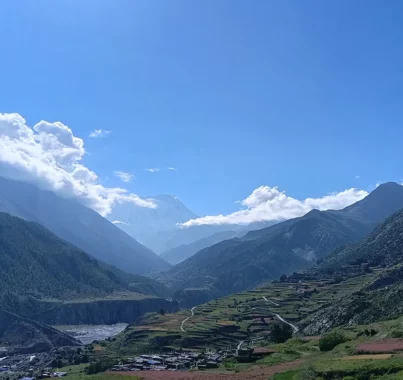

The scent of pink blossoms, thus we strongly advise you to travel to Nepal if you have not already seen the stunning forest of the Himalayan region, which is covered in rhododendron blooms. Because of its eye-catching hues, rhododendron is marketed as an ornamental plant all over the world. Because rhododendrons are so beautiful, you will see their pink blossoms when you start your trekking adventure in Nepal’s Himalayan region.
In Nepal, rhododendron forests are extremely prevalent. The stunning Rhododendron Forest in Nepal attracts a sizable number of tourists. Additionally, in Nepal’s Himalayan region, the plant serves as a lifeline for a variety of diverse native flora and animals. As you hike at higher elevations, the vivid red rhododendron appears breathtakingly beautiful.
In Nepal’s upper Himalayan area, March and May are the best times to see rhododendrons in full bloom. Trekking in Nepal is most enjoyable during these months when rhododendron flowers are in bloom. You can discover the various rhododendron species by going on a rhododendron trek. This trip turns into one of the most romantic experiences of your life due to the captivating beauty of rhododendron flowers.
Your journey is made delightful by the breathtaking view of gorgeous white-capped peaks covered in rhododendron blossoms, which are crimson and pink in color. Local hikers refer to rhododendrons, Nepal’s floral emblem, as the “flower of the mountains.”
claimed to be the source of the Japanese phrase “flower of the heights” (“Takane no Hana,” which is frequently used to refer to an unreachable goal or prize). Another flower with surprising secrets is the rhododendron. Red is such a powerful emotion for Nepalis that it is featured on their national flag. The significance of the Red Rhododendron is also reflected in Nepal, where red-painted airplanes and sports team costumes are common. In Nepali, the rhododendron flower is known as Lali Guras.
The frills of a garment are like the fluttering petals of a rhododendron. Despite its beauty, the flower can appear far away at times, nearly too high to reach. The Japanese phrase “the bloom of the heights” is also attributed to it. As a result, you may be looking forward to embarking on this lovely vacation to see the most romantic location.
Rhododendron forests, which are typically scattered among other forest types, are widely distributed throughout Nepal’s central and eastern areas. And strolling among the stunning rhododendron blossoms when they are in bloom is a soul-satisfying experience.
Nepal’s national flower is the rhododendron, which is also referred to as “Laliguras” in Nepali. The rhododendron flower’s stunning crimson hue is a common sight throughout Nepal’s Himalayan regions. Of the thirty varieties of rhododendrons present in Nepal’s highlands, the Laliguras, or red rhododendron, is the most well-known and important tourist destination. The plant, which is primarily indigenous to the Eastern Asian Himalayan regions, belongs to the Ericaceae family of heaths and has a genus of more than 1,000 species. Nonetheless, rhododendron plants can also be found in Australia, Europe, and North America.
Since 2019 B.S., when His Majesty King Mahendra Bir Bikram Shah himself declared it to be the nation’s national flower, the rhododendron plant has a special place in Nepalese culture. Inspired by the various rhododendron species that grow throughout the nation, the Nepali government first started thinking about this new national symbol in the late 1980s.
Because it adorns stunning trekking routes and the entire country of Nepal with its richness, it is a flower that Nepalese people like. Despite being the most prevalent flower in Nepal, the nation takes pride in its most exquisite pink and crimson blossoms. Rhododendron is translated as “red rose trees” in Greek. Both deciduous and evergreen rhododendron plants have spectacular, huge red-petaled flowers, thick, dry bark, and delicate stems and branches.
There are several types of rhododendron that grow wild on the foothills of the Himalayas. Numerous varieties of rhododendron, which come in a variety of hues like red, pink, and light white, may be found in Nepal. Therefore, you might encounter many rhododendron tree species as you travel through Nepal’s Himalayan region. These trees range not only in color but also in height. A large white rhododendron forest with gnarled, moss-covered branches capped with glossy, evergreen leaves is especially impressive as you reach higher elevations through blooming rhododendron forest. You will always treasure this sight.
More than thirty species of rhododendron may be found in Nepal, including the well-known Lali Gurans, the country’s national flower, which can reach a height of 20 meters and features stunning red, pink, and white blossoms. In the spring, rhododendron blooms in the upper elevations of the Himalayas, between 2,400 and 2,800 meters.
Rhododendron trees come in a variety of kinds; you can see tall trees with big white blooms, shrubs with purple blossoms, or small plants that creep over the ground and have big red flowers. Additionally, as rhododendron woods naturally occur at higher elevations, you will need to hike above 1,500 meters if you want to see rhododendrons in the wild. There are rhododendron trees at elevations as low as 200 meters and as high as 600 meters.
The tree has the longest blooming period and can grow up to 15 meters in height. Since the Nepalese Ambassador planted a rhododendron during his 2010 visit, it is considered Nepal’s national flower, signifying the country’s longstanding relationship with the Botanical Garden, which dates back to 1802.
Astragalus, Lonicera, caragana, white magnolias, orchids, lavender primus, blue irises, and saxifrages are only a few of the many varieties of rhododendron that are abundant in Nepal.
Rhododendron, also known as “arboretum,” “Campanulatum,” and “Forrestii” rhododendrons, is a common species that you may encounter while trekking in Nepal’s higher elevations. The “arboretum,” a striking variety of Rhododendron that reaches a height of around 20 meters and blossoms into stunning red rhododendron petals, is the national flower of Nepal. The purple, blue, and white blossoms of the “Campulatum” rhododendron reach a height of around five meters. Unlike other rhododendrons, the other species, called “Forrestii,” grows at a higher elevation of 20 centimeters.
This species has tiny leaves and is smaller. The blossoms develop into stunning, big, vivid crimson blooms. Rhododendron arboretum woods, which range in height from 1,400 to 3,600 meters, are widespread and gorgeous across the nation. Nepal’s natural beauty is enhanced by the vivid red flowers that bloom at an elevation of 1,400 meters. At higher heights, the rhododendron’s hue changes to pink and eventually turns pure. The most adored flower among Nepalese is the rhododendron, also known as the Lali Gurans, which is integral to the country’s culture, economics, and affections.
The finest time of year to see rhododendron blooms in pink, red, and white is in the spring. Therefore, spring is the ideal time of year to witness rhododendrons in full bloom in their native environment. March until early May is when many rhododendron species bloom. As a result, you can anticipate that your visits will fall within this time frame.
Tourists can not help but gaze at the riot of red blooms along Nepal’s stunning hiking routes, which are adorned with the rhododendron flower’s natural beauty. It transforms the walking trail’s forest into an adorned bride when it is in full bloom in the spring. And in the spring, rhododendron blooms are in full bloom throughout Nepal’s Himalayan area.
Trekking places in Nepal are made even more stunning by the sight of the snow-covered rhododendron forest in the winter. It is amazing to see a home full of different colored butterflies and bees buzzing around. Yes, Nepal is a place to visit in all four seasons. The vista is breathtaking if you are seeking for the humming and buzzing of wild bees in the sea colors of the snow-covered rhododendron forests at freezing temperatures.
Nepali hikers are accustomed to seeing rhododendrons. In March and April, the Ghorepani Poon Hill Trek is a sight to behold, with a variety of rhododendrons in full bloom. Many hikers visit the area to witness the blooms.
The well-proportioned rhododendron is a flowering plant that is very simple to cultivate. However, prolonged exposure to intense sunlight and high temperatures with little moisture will cause the blossom to dry up and wither, making it delicate. According to some, the Nepali highlands in March offer rhododendrons the ideal growing conditions and an unmatched setting.
As a visitor visiting Nepal, you might be curious to see rhododendrons while hiking to your preferred trekking locations. These are the top treks that might be of interest to you.
The stunning Milke Danda hills are home to 30 different varieties of rhododendron, which is a surprising feature of the trekking location. Teenjura, Milke, and Jajale—also referred to as the TMJ area and the nation’s rhododendron capital—are home to a sizable number of rhododendron species. Milke Danda is home to the most beautiful, varied species and sufficient rhododendron trees. They are also in the Ruby Valley Route, the Everest Region, and the Langtang Valley. Ghandruk and Poon Hill are also important hotspots. Trek to Everest provides the most romantic rhododendron flower view trek in order to ensure complete happiness for our guests.
Poon Hill, the upper Langtang Valley, and Milke Danda are the main sites. You will be able to see the stunning peaks in the area throughout this hike in addition to the rhododendron flowers. Following rocky ridges with a few small lakes, the Milke Danda walking track ascends through vast, unspoiled rhododendron forests.
One of the naturally occurring plants in Nepal’s Himalayan areas, rhododendrons offer numerous health advantages. It aids in the prevention and treatment of asthma, bronchitis, inflammation, constipation, heart disease, and dysentery. The rhododendron flower’s red petals act as a natural remedy and pain reliever. Approximately 65% of people worldwide use the rhododendron plant’s therapeutic qualities for treatment, according to WHO (2000).
In the traditional culture of the Himalayan area of Nepal, rhododendron flowers are ground into powders that are frequently used in pickles, which are dips made with salt and mint leaves. The antifungal, antioxidant, and antibacterial qualities of rhododendron blooms are what give them their health advantages.
Rhododendron flowers have long been utilized in the homeopathic medical system to create remedies for a variety of illnesses. Read about the amazing effects it has on your body.
Indeed, traditional Nepali medicine makes use of the country’s national flower, the laliguras flower (Rhododendron arboreum). Its petals and extracts are used to cure a variety of illnesses, such as skin maladies, digestive problems, respiratory disorders, and dysentery, and are thought to have therapeutic qualities.
A simple remedy for headaches is to apply rhododendron leaf paste to the forehead. It is used to alleviate inflammation because of its strong astringent qualities. Stomach pains are relieved by the juice extract.
Laliguras is utilized for a number of health benefits, such as anti-inflammatory and anti-infective qualities, and is well known for its antioxidant qualities.
Rhododendron petals are used in homeopathic and Ayurvedic treatments to treat pneumonia, arthritis, and gout.
Inflammation is instantly reduced by the rhododendron plant extract.
The two anti-inflammatory compounds quercetin and rutin, which are present in rhododendron plants, reduce renal inflammation of the bladder while rutin aids in the treatment of gastrointestinal infections and mouth ulcers.
Pain Relief: Research is being done on the potential for fermented Laliguras beverages to alleviate pain.
What do the colors of the laliguras flower represent?
The hues of the Laliguras (Rhododendron) flower, particularly red, pink, and white, are symbolic of bravery, love, and purity in Nepali culture. Particularly important is the vivid red hue, which represents courage and the resilient nature of the Nepalese people.
Red: The Laliguras’ deep cultural association with the color red is a representation of courage, tenacity, and patriotism. Even Nepal’s national flag makes use of it.
Pink: The color pink is frequently linked to feelings of tenderness, love, and compassion; the pink Laliguras might be interpreted as a representation of these feelings.
White: Although less popular than pink and red, white can represent innocence and purity.
Indeed, rhododendrons are toxic to people. Toxic compounds known as grayanotoxins are found in every part of the plant, including the leaves, flowers, and nectar. In addition to more serious side effects like bradycardia and hypotension, ingesting these poisons might result in symptoms like nausea, vomiting, and diarrhea.
Burans (बुरान्स) is the most often used Indian name for rhododendron, especially for the species Rhododendron arboreum. According to Breathe Nepal Trekking, it is called Laligurans (लालगुराँस) in Nepali. It can also be called Kurvak (कुरवक) in Sanskrit and Gurans (गुराँस) in Nepali.
The metaphorical significance of rhododendrons vary according to the blossom color and cultural setting. They can generally represent bravery, resiliency, patriotism, purity, and love, especially in Nepalese culture, where they are the national flower, or laliguras. Because of their toxicity, they might also be connected to caution or danger in some cultures. They can also represent elegance, prosperity, and beauty.
The Kathmandu Valley, Ghorepani, Milke Danda, Langtang National Park, and other surrounding regions are home to rhododendrons. While the Kathmandu Valley itself boasts a number of parks and gardens, including the Godavari Botanical Garden, the Langtang Valley is renowned for its rhododendron woods. Other well-liked locations are the Milke Danda region in eastern Nepal and the Ghorepani climb in the Annapurna region.