




Trip booking for 2025 and 2026 is open, you can book any trip from our website.


Most people are familiar with Mount Everest, also known as Sagarmatha in Nepali, but few know that it is part of Sagarmatha National Park (SNP). Trekkers, adventurers, and nature lovers all find refuge in SNP.
We give you all the knowledge you need to make your next trip to the Everest region both educational and rewarding in this post about Sagarmatha National Park.
Sagarmatha National Park was created in 1976 and is located in the Solukhumbu District in northeastern Nepal. It occupies 1,148 km2 (443 sq mi) in the Solukhumbhu District of eastern Nepal and extends from the Dudh Koshi River in the south to the Nepal-China (Tibet) border in the north.
Additionally, it passes through Makalu Barun National Park in Nepal and Comolangma National Nature Preserve in Tibet. To go to the Khumbu region, most tourists take a plane from Kathmandu/Manthali to Lukla. From Lukla, they can hike a short distance to Sagarmatha National Park.
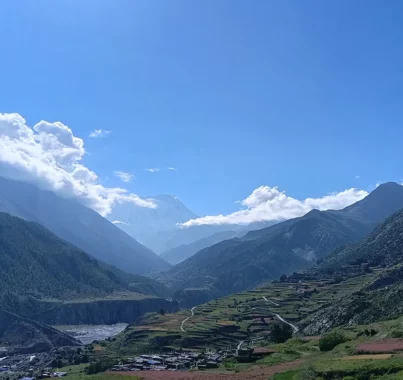
In 1979, Sagarmatha National Park received UNESCO World Heritage Site designation. Conserving the natural biodiversity, preserving the ecological balance of the area, and protecting the cultural history of the local Sherpa populations were the key goals of the national park’s creation. The park features steep valleys, glaciers, and alpine meadows, among other ecosystems.
The Everest region, which is renowned for its tall peaks, including Mount Everest, the highest in the world, is synonymous with Sagarmatha National Park. Around 7,000 Sherpas, spread across more than 20 communities, live inside Sagarmatha National Park, which also has seven more mountains with elevations above 7,000 meters.
Because of their beliefs, the Sherpas forbid hunting and the killing of animals in the Everest region. As a result, all of the non-vegetarian goods available in Sagarmatha National Park are imported, therefore they might not be clean or fresh. Because of this, we do not advise our visitors visiting this area to eat anything that is not vegetarian.
This area offers a distinctive fusion of adventure and tradition because of its rich cultural past.
Visitors must obtain a Sagarmatha National Park Permit in order to explore the park’s treasures. This permission is available at the Nepal Tourism Board Office at Pradarshani Marg in Kathmandu or at the Sagarmatha National Park Entry Gate in Monjo.
Your nationality affects the precise cost of this permit. The price is NRS 100 for Nepalis, NRS 1,500 for SAARC nationals, and NRS 3,000 for everyone else. Please be aware that you can only use Nepali currency in the Everest region and that you must pay this fee in NPR. To obtain the permit, you will require your passport.
The permit nature is protected by this permit, which also supports conservation efforts and guarantees a sustainable and controlled influx of hikers.
We will obtain the permits for you so that you can enjoy your hike if you choose to go into Sagarmatha National Park with us.
There are many different kinds of plants and animals in the park. The subalpine regions are home to forests of fir, Himalayan birch, rhododendron, and junipers. Over 5,000 meters, lichens and mosses can be found in the alpine environment. Various estimates place the number of floral species in this national park at around 1,000.
The Himalayan tahr, red panda, bearded vulture, snowcock, musk deer, and many pheasant species are among the elusive animals that can be found there. Snow leopards roam at elevations above 3,500 meters, while Indian leopards can be found in lower elevations.
Sagarmatha National Park is a cultural gem in addition to a natural wonder. Traditional Sherpa settlements, such as Namche Bazaar, Khumjung, and Thame, are dotted throughout the national park and each has its own unique beauty.
Sherpas are renowned for their skill as mountaineers and are accustomed to the vast mountains. The Sherpas use a number of monasteries and gompas as sanctuaries where religious ceremonies and rituals are performed.
With its elaborately carved wooden façade, prayer flags, and mani walls, the building showcases the distinctive fusion of Tibetan and Sherpa forms. Monasteries, chortens, and prayer flags are scattered throughout the park, symbolizing the Sherpas’ spiritual bond with the mountains.
Sagarmatha National Park has several iconic landmarks worth visiting. Here are a few of them.
The trek to Everest Base Camp is a pilgrimage for trekkers worldwide. The journey provides breathtaking vistas of the Khumbu Glacier and well-known peaks, making it a once-in-a-lifetime experience.
The breathtaking Gokyo Lakes, a group of blue glacial lakes encircled by snow-capped peaks, are located within the park. A breathtaking overview of the Everest massif may be seen from the Gokyo Ri hike.
The highest glacier in the world, Khumbu Glacier, is 7,600 meters (24,900 feet) high at its source. In Nepal, it is also the biggest glacier.
The main barrier for climbers trying to reach the Everest summit by the southern standard route is the Khumbu Icefall, which is part of this glacier and is located at the west end of lower Western Cwm. The final portion of the trekkers’ journey to the Everest base camp follows the Khumbu glacier.
At 5,555 meters, Kala Patthar is a well-liked vantage point with breathtaking sweeping views of the neighboring Himalayan giants, such as Mount Everest, Lhotse, Nuptse, Ama Dablam, and others.
Before heading back to Lukla, the majority of hikers who make the journey to Everest Base Camp stop at this viewpoint. The highest point in Nepal, Kala Patthar, is accessible without a climbing permit. However, traveling to Kala Patthar is difficult because to the high altitude and thin air.
In Nepal, Namche Bazaar is situated inside Sagarmatha National Park. The town is a major trading hub for the Khumbu region and a well-liked destination for visitors heading to the high mountains in Mount Everest National Park. It is located 3,440 meters (11,286 feet) above sea level.
As the beginning point for numerous hiking, expeditions, and other adventure activities, Namche Bazaar is frequently referred to as the gateway to Mount Everest. There are Wi-Fi-connected cafes, restaurants, shops offering trek gear and souvenirs, and even an Irish pub in this busy town, which is the center of Everest region adventures.
This national park is home to Mount Everest (8,848m), Lhotse (8,516 m; 27,940 ft), and Nuptse (7,861 m; 25,791 ft). Famous peaks including Ama Dablam (6,812 meters/22,349 feet), Thermasarkhu (6,608 meters/21,680 feet), Kwangde (6,011/1,9721 feet), and Khangtiaga (6783 meters/22,254 feet) are also located in the park.
Tengboche Monastery, the biggest gompa in the Khumbu area, is a haven for hikers and mountaineers as well as a center of spirituality for the local Sherpa people. The Nyingma tradition of Tibetan Buddhism is practiced in the monastery, and its spiritual atmosphere draws tourists looking for refuge in the breathtaking Himalayan scenery.Another gem of architecture is Tengboche Monastery. The monastery’s visual appeal is enhanced by the elaborate woodwork, vibrant murals, and traditional Tibetan design features. Its magnificent scene is enhanced by the snow-capped peaks in the background, such as Ama Dablam.
Growing human activity and climate change pose threats to Sagarmatha National Park’s fragile ecosystem. Beginning in the 1960s, Sagarmatha National Park (SNP) has seen an annual increase in the number of visitors.
The number of visitors to SNP grew from 3,600 in 1979 to 25,000 in 2010. According to the most recent data, 57,690 people traveled to the Everest region in 2022. There are now environmental issues in this area as a result of the tourist boom. As a result, conservation initiatives for eco-friendly travel are under progress.
The most breathtaking and untamed scenery may be seen at Sagarmatha National Park. Every step in this park is an adventure into the heart of the Himalayas, from the beautiful peaks to the rich cultural tapestry. Discovering the breathtaking natural treasures of Sagarmatha National Park is more than just an adventure.
If you decide to trek in the Everest region with us, our knowledgeable guides will ensure that you see all the important locations in Sagarmatha National Park on your way to your trek destination, which includes Everest Base Camp.