




Trip booking for 2025 and 2026 is open, you can book any trip from our website.

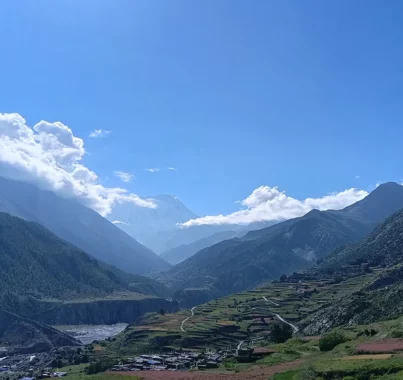

Nepal, the Himalayan nation, is situated in South Asia between China in the north and India in the east, west, and south. Its total size is 147,181 square kilometers. It is only about 885 kilometers long from east to west. The average width is just 193 kilometers, and it is located in the temperate zone north of the Tropic of Cancer, between roughly 28°N and 85°E. The Himalayan, hilly, and terai regions are the three primary geographical divisions of the nation. Mt. Everest, at 8,848 meters above sea level, is the highest point, whereas Kechanakawal, Jhapa, is the lowest, at 59 meters.
In Nepal, many types of plants and animals can be found depending on the area. The Himalayan Mountains are home to some of the rarest wild creatures, reptiles, and birds in the world. They are a diverse region with grasslands, temperate forests, ice-covered foothills, and an overwhelming variety of wildlife. Furthermore, it is the highest and longest mountain range, supporting numerous endangered species.
Despite being the planet’s highest mountain range, it provides an environment that is conducive to the incredible diversity of life. As we ascend over 4000 meters, the sea level reaches Nepal’s alpine region, which is nearly always covered in ice. Rhododendron, juniper, and scrub and woody vegetation trees can be found in the lower area up to 4200 meters. Only alpine florae with some soil, sedge mosses, and little grasses with a tundra-like connotation are found above it.
Although some may still exist in places like Dolpa and Humla, in the past the wild Yak and big Tibetan sheep could be found practically everywhere in the Himalayan region. Redstarts and scoops are frequently spotted alongside the creeks and torrents, while the birdlife at Lammergeyer includes snowcocks, snow partridges, choughs, and bunting. The only animals that can survive at high elevations are yaks. They cater to both draught and back animals. This page describes the most prevalent creatures found in the Himalayan region.
With reddish-brown fur, a long, shaggy tail, and a waddling walk because of its shorter front legs, the red panda is a small but amazing animal that is about the size of a domestic cat but has a longer body. These endangered Himalayan species, most commonly known as the red fox, are smaller and have the head of a panda and the body of a cat.
The eastern Himalayas are home to this little arboreal animal. In contrast to other mountain animals, it prefers to dwell in temperate regions surrounded by coniferous and deciduous forests. Its food sources include fruit, acorns, roots, eggs, insects, and birds. It is a solitary animal that is mostly sedentary during the day and active from nightfall to dawn. Other names for it include red bear-cat, red cat-bear, and smaller panda.
Because of habitat degradation, poaching, and fragmentation, the Red Panda population faces extinction. But tourists can see hollow trees or bamboo. Try to find them on bamboo trees the next time you are on an adventure in the Himalayan Jungle.
Nepal’s national bird is the Himalayan Monal, also known as the Impeyan Pheasant (Lophophorus impedance), a magnificently colorful member of the pheasant family. (Lophophorus impedance) Himalayan Monal/Impeyan Pheasant. The male Himalayan monal is distinguished by its eye-catching plumage, which comes in a variety of metallic hues, including as red, blue, green, and purple.
Its incredibly multicolored plumage has earned it the nickname “nine colored bird.” Another distinguishing characteristic of the male monal is its metallic green crest. They also have a purple back, bluish-black wings, and a reddish-brown neck. Males of the species have been observed with multiple females, indicating that they are polygamous. The male monal attracts the female during mating season by displaying his physique and making noises, such as bobbling his crest and fanning his tails.
It is widely distributed throughout Nepal’s Himalayan regions, from Darchula in the west to Kanchenjunga in the east. They are carefully maintained in Nepal’s conservation zones and Himalayan National Parks. You can see them when trekking in the foothills of the Himalayas, particularly on the high mountain slopes that range from 6880 to 14800 feet above sea level.
Male Himalayan Tahrs, which are native to the Himalayan regions of Northern India, Nepal, and Southern Tibet, have coarse, tangled manes over their necks, chests, and shoulders. They are related to wild goats and have deep copper-brown coats. While the female Himalayan Tahr’s horns are shorter and less pointed rearward than the male’s, the male’s horns can reach up to 46 cm.
They have a thick undercoat and a lengthy, earthy-colored top coat. In the cold weather, it keeps their bodies warm. Their jacket becomes lighter in shade and slimmer in the spring. As a result, throughout the entire season, the Himalayan Tahr can effectively regulate the interior temperature.
The Himalayan Tahr’s hooves are yet another amazing feature. The rubbery, smooth centers of the hooves provide excellent traction. Thus, the Himalayan Tahrs may surely walk on the high mountain slopes.
The Himalayan Tahr weighs 40–85 kg and reaches a height of 4-5.5 feet. Compared to male Tahrs, females have more subdued horns. The men compete with each other for the female by using their solid horns. A herd of 20–26 Tahrs follows them. They dash along the high mountain slopes as soon as they see the danger. Their diet basically consists of bushes, grass, and spices.
The Himalayan Black Bear, sometimes known as the Asiatic Black Bear, is found in Nepal’s highland protected areas, including the Langtang National Park, Kanchenjunga Conservation Area, Shivapuri National Park, Shey Phoksundo National Park, Sagarmatha National Park, and others.
An adult Himalayan black bear typically weighs up to 120 kg, has a dark coat, and has a faint yellow crescent in the chest. Its body length ranges from 54 to 65 inches. However, the number of Himalayan black bears has drastically declined as a result of hunting and deforestation. It is impossible to estimate the exact number of bears in the population due to insufficient research.
The mountain bears of the Himalayas are skilled climbers. They burn on tree branches throughout the great bulk of the day. They also collapsed the branches of the trees to create makeshift dwellings. At elevations of 10,000–12,000 feet, the Himalayan wild bears spend the middle of the year in high areas.
In any event, they fall to the lowest level of their natural surroundings when it looks like winter. The winter months are when the Himalayan wild bears sleep the most. Therefore, they consume foods heavy in fat before winter arrives in order to add more layers of fat to their bodies. The wild bears of the Himalayas are omnivores. They consume roots, nuts, nectar, and small animals.
Poaching and the illicit trade in musk pods, which are used to make fragrances and traditional remedies, are the main threats to the Himalayan fauna, which includes musk deer. Musk deer are timid, shy, crepuscular, nocturnal, and forest dwellers.
Musk deer exclusively eat leaves, flowers, and grasses and are primarily found in mountainous, wooded areas. As a result, the Musk Deer is a highly poached animal, and as it prefers to remain distant from human habitation, finding this scented creature will be a challenging journey.
The Moschidae family includes the Himalaya Musk Deer. Strict conservation plans and management measures, such as habitat management and anti-poaching, are therefore essential. Therefore, our initial goal was to comprehend the habitat ecology and latrine use behavior of musk deer in the Neshyang valley, Manang, Annapurna Conservation Area (ACA) in the high Himalaya of Nepal in order to develop target species-specific conservation strategies.
Typically found between 3000 and 5000 meters above sea level, the Yak is a cow-like mammal with a drooping head, huge build, and relatively long hair. These days, however, it is uncommon to locate wild yaks; instead, you find domestic ones that serve a variety of functions.
When cars are not available, it is one of the main modes of transportation; milk is used to create cheese and other baked goods. They are also used for fiber and meat. They are also a favorite with travelers who frequently go on Yak safari in the Himalayan hill country. Do not pass up riding this enormously muscular beast in the chilly desert.
The high highlands of India, Pakistan, and Nepal are home to the Himalayan Blue Sheep, another Himalayan animal. In Nepal, the Naur people dwell at an elevation of 4000-6000 meters above sea level and prefer to live in the rocky highlands. Because of this, they have a short, thick coat that is blue-tinged and greyish, which helps them blend in with the Himalayan rocks. In order to blend in with the rocky environment and make it harder for predators to detect them, this mammal stays still when confronted with threats like snow leopards.
A single herd of ten or more Himalayan blue sheep will march. They appreciate grazing in the broad meadows with a plenty of grass. Despite being core grazers, they also consume bushes and plants when grass is not available.
The snow leopard, one of the main draws of the Himalayan fauna, is renowned for its magnificent look and angry approach to its prey. With its striking white and yellowish skin, thick coat, and black and brown patches, this large cat is categorized as an endangered species, and its habitat is now difficult to reach.
This big cat, which prefers to hunt nearby small animals, loves rugged, steep terrain with stone outcrops and canyons to hide in. But, since there are only 3000-7000 snow leopards remaining in the wild, seeing this shy animal will need patience.
Wild boar are medium-sized mammals that are primarily found in the lower and hilly regions of the Himalayas in Asia, Northwest Africa, and Europe. A mature wild boar can weigh up to 200 kg and range in length from 4 to 6.5 feet. Brown, black, grey, or red are some of the colors of wild boars’ thick coats.
Being naturally bashful, wild boars attempt to blend in with their surroundings. Additionally, because they are nocturnal, it is very uncommon to see them during the day. A pair of tusks on the lower lip are the most distinctive characteristic of a wild hog. Male wild boars have longer tusks than females.
During mating season, which runs from November to January, male wild boars battle for the female using their tusks. They only emerge at night to search for food, resting for ten to twelve hours throughout the day. Being omnivores, wild boars consume carrion, berries, nuts, roots, and insects.
One of the highest elevation-dwelling mammals in the world, marmots are found in the Himalayan regions of India, Nepal, and Pakistan. They are particularly common between timberline and snowline, at heights of 3,500 to 5,200 m. These regions usually experience temperatures between 8°C and 12°C, which is typical of arid alpine meadows with minimal precipitation.
The main habitats of Himalayan marmots are arid, open spaces such as deserts, grasslands, and alpine meadows. The Northwestern Himalayan alpine shrub and meadows ecoregion contains a large portion of their habitat. Stunted evergreen shrubs and birch-dominated woodland patches make up the majority of the vegetation in this ecoregion. This shrub-dominated ecosystem gives way to wide alpine meadows at higher elevations.
closely related to the yellow-bellied marmot, the hoary marmot, and the woodchuck. The dark chocolate-brown coat of Himalayan marmots contrasts with yellow patches on the chest and face. According to the IUCN Red List of Threatened Species, it is categorized as Least Concerned.
They love blooming plants like leaves, roots, tubers, seeds, grains, nuts, and fruits because they are herbivores by nature. These are a few of the incredible creatures that the Great Himalayan range’s enormous, frigid mountains are home to! Yes, I am aware that the list is really thrilling and has you absolutely enthralled, but hold on—March through June and September through November are the ideal times to explore the Himalayas.