




Trip booking for 2025 and 2026 is open, you can book any trip from our website.


Is Nepal a great place to visit? Many people may also question why they need to travel to Nepal.
Nepal is the ideal location to enjoy the pleasures of all the worlds at one place. Furthermore, it is merely a location to see some oddities or have a singular experience.
Some are drawn to the magnificent Himalayas, while others are pleased by the people’s hospitality and culture. While some could discover natural pleasure, others would seek spiritual awakening.
Here are some justifications for traveling to Nepal that will allow you to fulfill your soul with an experience of a lifetime.
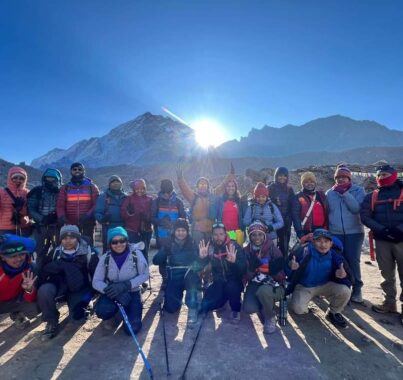
Trekking is one of the main reasons to travel to Nepal. When it comes to the world’s top trekking routes, Nepal consistently ranks first.
Do you know why Nepal is the most popular destination for hikers?
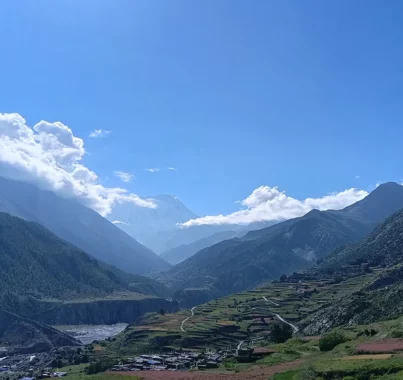
Nepal, the home of the magnificent Himalayas, offers you genuine life experiences that fill your heart with joy that you can not get anyplace else. Because of its breathtaking terrain geography, elevation, and cultural diversity, Nepal, the country of the mountains, provides the greatest trekking experience on earth. Eight of the top ten tallest peaks in the world, including the highest mountain in the world, Mount Everest (8848.86m), are located in Nepal. Furthermore, about 1300 summits are higher than 6000 meters above sea level.
Trekkers adore Nepal because of its breathtaking vistas of the magnificent mountains and captivating landscapes, which have earned it the moniker “paradise.” Nepal’s trekking differs from that of other nations due to its wonderful climate, cultural richness, peaceful populace, and rural mountain lifestyle.
However, a number of elements are crucial in determining if Nepal is a good place to trek. For instance, the government’s travel-friendly initiatives, the availability of a variety of flora and wildlife, the presence of ethnic groups with rich cultural traditions, the well-maintained paths, the adequate lodging, the eating facilities, and the friendly locals.These factors have a direct impact on Nepal’s standing as a peaceful trekking destination across the globe.
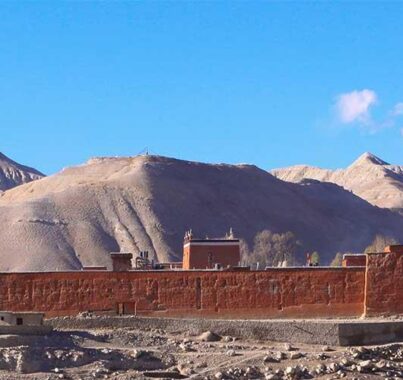
Reaching the base of Mount Everest, also known as the Everest Base Camp trip, is the goal of every hiker on the planet. Annapurna and Langtang are two equally well-known and well-liked trekking destinations in addition to the Everest region. The Everest View, Everest Three Pass Circuit, Gokyo Lakes and Gokyo Ri, Annapurna Base Camp, Annapurna Circuit, Ghorepani Poonhill, Mardi Himal, Langtang Valley, Langtang Gosaikunda, and Tamang Heritage Trail are some of the popular treks in these regions. Popular off-the-beaten-path climbs include the Tsum Valley Trek, Upper Dolpo Trek, Upper Mustang Trek, Makalu Trek, Tilicho Lake & Mesokanto Pass Trek, Kanchenjunga Base Camp Trek, Rowaling Trek, Nar Phu Valley Trek, and others.
to high-altitude trekking. Additionally, Nepal has family-friendly hikes that are suitable for kids, including homestay treks like the Ghalegaun homestay trek, the Chepang hill homestay trek, and the Kathmandu and Pokhara valley perimeter trek routes. Additionally, a number of hiking routes from the east to the west provide a wide range of life-changing experiences that are completely satisfying.
The world’s greatest mountain experiences may be found on Nepal’s trekking trails, which offer inner calm and a fresh perspective on life. For the best trekking experiences, people from all over the world travel to Nepal year-round.
The opportunity to explore Nepal’s many cultures is a significant additional motivation to travel there. For all cultural tourists, Nepal, the land of diversity, is an open museum.
There are distinct traditions, customs, and lifestyles in every region of the nation.
It would be amazing to see such varied people coexisting peacefully, do not you think?
Nepal is the perfect place for tourists to explore this amazing educational opportunity and integrate into their distinct culture.
Did you know that in Nepali culture, guests are revered as gods? The guest in “Atithi Devo Bhava” is God.
Because of this pure perspective, tourists are constantly excited to visit Nepal in order to experience the warm welcome and reverence of the Nepalese people.
One of the most diverse countries in the world, Nepal is home to a vast array of racial, ethnic, religious, linguistic, and cultural practices and lifestyles despite its small size. Nepal is a common garden among four castes and thirty-six subcastes (ethnic groups).
You will be amazed to see people from diverse backgrounds living together in such harmony and cooperation.
Cultural variety is the outcome of diverse topography and ethnicity. Nepal is divided into three different regions: the Terai, the Hilly, and the Mountain. These landforms are home to distinctive civilizations. With their own mother tongues, rituals, beliefs, religion, customs, social norms, attire, cuisines, drinks, arts, crafts, history, literature, folklore, music (dance and songs), festivals, celebrations, and more, Nepal is home to over 100 different ethnic groups. Every tourist is also captivated by a distinctive culture that appreciates all aspects of the environment, including trees and animals.
It may surprise you to learn that Nepal, the home of numerous gods and goddesses, is the only nation in the world with a living goddess, known as Kumari.
In order to comprehend Nepal’s cultural diversity and interactions, tourists travel there. They participate in many holidays and festivities. The cultural elements, like Dashain, Tihar, Holi, Lhosar, jatras, parvas, etc., and their significance captivate them.
In order to integrate with the culturally diverse population, discover the true meaning of life, and pursue spiritual fulfillment, tourists primarily travel to Nepal, the land of Buddha.
Nepal’s distinct natural and cultural heritage is a major draw for tourists. Nepal is, in fact, an open museum where tourists may learn a lot.
Despite its tiny size, Nepal is home to a wealth of natural and cultural heritages, in case you were wondering. Of the numerous locations, UNESCO designated ten in Nepal as World Heritage Sites. There are four world heritage sites in total: Lumbini and the Kathmandu Valley are cultural sites, while Sagarmatha National Park and Chitwan are natural sites.
Because each place is unique, travelers travel to Nepal in order to see these unspoiled gems.
The hub of nature, history, and religion is Kathmandu, the city of the temple. The Kathmandu Valley is completely open to the outside world.
There are about seven world heritage sites in the Kathmandu Valley proper, in case you were wondering.
The Kathmandu Valley’s UNESCO World Heritage Sites are
Similarly, the Boudhanath, one of the largest stupas in the world, is the center of spirituality for Buddhists around the world.
The Swayambhunath, which literally translates to “self-sprung,” is a world-famous example of religious peace and is known as the Monkey temple. Thus, there are two distinct architectural styles on the site for Buddhists and Hindus. Additionally, the vista of the Kathmandu Valley from the summit is breathtaking.
The national deity and center of religion, Pashupatinath, is the most famous shrine for Lord Shiva worldwide.
Through three closely spaced, individually unique durbar squares—Kathmandu Durbar Square, Patan Durbar Square, and Bhaktapur Durbar Square—visitors can learn about the history, culture, architecture, etc.
The Kathmandu Valley’s three Durbar squares are the epicenters of ancient cultures, history, architecture, and enticing arts and traditional crafts.
Due to the complete differences between these durbar squares, visitors can gain a better insight of the past Nepali civilizations. Visitors even take part in various parvas and jatras.
The following natural and cultural treasures are located outside the Kathmandu Valley:
Lumbini, the birthplace of Lord Buddha, is a highly regarded pilgrimage site for Buddhists and peace seekers worldwide.
It is well recognized as the land of peace and the hub of wisdom. Therefore, you must visit Nepal if you are seeking total peace and spirituality.
This location’s cultural and historical significance are equally significant. You might also see a range of birds there.
The finest exotic experiences are offered by Chitwan National Park, which is ideal for jungle safaris and activities like kayaking, elephant riding, village walks, visiting breeding centers, bird watching, and Tharu traditional events.
Rich biodiversity, including rare species that draw travelers from all over the world, can be found in a relatively short region. Among the attractions are the Royal Bengal tiger, Gharial, endangered One-horned rhinoceros, and others.
It may surprise you to learn that Chitwan National Park has more bird species than all of Europe. Additionally, this is where Elephant Polo got its start, and international competitions are held.
The world’s highest peak, Mount Everest (8848.86m), is located in Sagarmatha National Park, which is well-known for its magnificent Himalayas, breathtaking views, and breathtaking snowcapped peaks, mountains, glaciers, and valleys. It is also known for its excellent mountain lifestyle, welcoming locals, first-rate trekking routes, and rich biodiversity, which includes rare high-altitude flora and fauna like snow leopards, red pandas, and medicinal herbs.
Welcoming and Friendly People
Are you aware that in Nepal, you will not be strangers?
Despite the fact that Nepal is home to many different ethnic groups, there is a sense of solidarity and solidarity.
They all have the same heart and emotions while having distinct faces.
People from Nepal are thought to be among the world’s kindest and most hospitable.
Tourists are drawn to Nepal for this reason.
The United Nations World Tourism Organization has named Nepal the World’s Leading Hospitality Country.
You may question whether others who have nothing to offer will likewise be inclined to assist you.
Visitors return time and time again to Nepal because of the country’s respect and kind welcome.
The faces of Nepalese people are always cheerful and they are quite hospitable. They are constantly grounded. They are rich in openness, honesty, and kindness despite their low rank and way of life.
Furthermore, the most helpful people you will ever encounter are Nepalese. For example, when you arrive at the airport or on the hike, everyone you encounter is truly delighted to assist you.
In their homes, many visitors say they feel as though they are strolling around the streets. When you are in need, people are always willing to help. Despite their inability to speak a foreign language, they are willing to share their knowledge and demonstrate their way of life. They are happy to assist you with informal communication and sign gestures.
Additionally, they will not cause any discomfort to visitors. The likelihood of harassment is minimal.and offenses against visitors in contrast to other nations. You may ask why Nepali culture regards visitors as gods.
Allow me to illustrate how beneficial the Nepalese are:
Asking for assistance with direction in different nations may leave you feeling let down. If you are lucky, they will only express themselves verbally.
However, in Nepal, if you ask for guidance or assistance, the individual will drive you to your location, regardless of how vital his profession may be.
Because of this, the people here are so amiable that they value the person asking for help and give them their wholehearted support without expecting anything in return.
However, that does not imply that Nepalis lack strength.
Are you aware that Nepal is home to the world’s most valiant warriors, the Gurkhas?
“If I possessed Gurkhas, no armies in the world would beat me,” Adolf Hitler once declared.
“A man is either lying or is Gurkha if he claims he is not frightened of dying,” stated Field Marshal Sam Manekshaw.
The courage of the Nepali people is conceivable. The true Gurkha in need are all Nepalis, despite their shyness and silence.
During the 2018 US-North Korea summit in Singapore, even Donald Trump, the US president at the time, asked Gurkha for protection.
Many are currently serving in peacekeeping operations to maintain world peace.
As a result, travelers travel to Nepal in order to meet and get to know these individuals.
Another important aspect contributing to Nepal’s tourist surge is the country’s safe and secure atmosphere. Nepal is the safest and most tranquil country, which attracts a lot of tourists because of its internal and external calm, hospitable locals, nice atmosphere, and government assistance for travelers.
Are you aware? According to the Global Peace Index (2022), Nepal is ranked 73rd out of 163 countries and is officially the second safest country in South Asia.
Nepal is a peaceful nation with a strong belief in the UN that pursues a non-alignment foreign policy. In light of this, Nepal is the safest and most secure destination.
For a few years, Nepal has been a calm and stable nation free from internal strife. As of right now, there has been no evidence of terrorism. There is very little violent crime; instead, most crimes are connected to bribery, corruption, and tourist scams.
Strike (also called Bandha) may not usually happen, although it might cause problems. There is occasional violence and activity directed at tourists.
Kidnapping and robbery are rarely reported. Although it is uncommon, petty theft can occur anywhere. But it would be beneficial if you were careful about the security of your possessions. Additionally, one should stay away from scammers and general beggars who pose as sick relatives or donors in order to obtain money.
The people of Nepal are incredibly hospitable and nice to tourists. As a result, visitors can trust Nepalese people. However, it is advised that visitors avoid flashing their affluence or showing off large sums of money around typically impoverished individuals, as this may coerce them into begging or scamming.
Crucially, nothing is unknown when traveling at high elevations because we are in mountainous nations. To avoid altitude sickness, high altitude issues, landslides, snow drifts, avalanches, earthquakes, monsoon rains, unavoidable weather changes, etc., it would be preferable to exercise extra caution.
Even while trekking in the Himalayas and other daring sports and activities are dangerous, they are nonetheless carried out with the fewest accidents to date.
Notably, Nepal is safe for women, children, families, and lone tourists. The likelihood of women being verbally abused and harassed is minimal. When traveling through isolated, conservative places, it might be very beneficial to observe local customs and dress in Nepali attire.
Urban areas have adequate roads, but trips to hilly and mountainous regions may not be as comfortable as you imagine in your hometown because of the rough terrain. Additionally, there are well-equipped tourist vehicles accessible, although public transit is not well maintained.
Air travel, which operates in difficult high-altitude terrain, is among the safest and greatest services available when compared to domestic carriers from other countries.
The Nepali government is remarkably dedicated and considerate of visitor safety. Tourists may just ring 100 or ask for assistance from a local station, and the police officers are highly supportive and helpful.
When trekking, it is best to have an insurance plan that covers high-altitude rescue. Your trip will also be safer if you travel with a licensed and professional company or guide, eat and drink hygienic food and beverages, receive the necessary vaccinations, and take good care of your things.
In terms of illnesses, diseases, and health dangers, the southern region of Nepal may be at risk for dengue, malaria, and snakes. At higher elevations, acute mountain sickness (AMS) and other altitudinal issues might also pose health dangers. Furthermore, metropolitan regions may have health problems due to pollution and sanitation concerns. However, if one is attentive about this beforehand, these are not the serious issues that result in death.
The Nepali government is remarkably dedicated and considerate of visitor safety. Tourists may just ring 100 or ask for assistance from a local station, and the police officers are highly supportive and helpful.
When trekking, it is best to have an insurance plan that covers high-altitude rescue. Your trip will also be safer if you travel with a licensed and professional company or guide, eat and drink hygienic food and beverages, receive the necessary vaccinations, and take good care of your things.
Go to Nepal to find a new purpose in life and to encounter things that will make you feel completely satisfied and happy. For the wonderful adventure, the ideal location is just waiting for you.