




Trip booking for 2025 and 2026 is open, you can book any trip from our website.





254 reviews in Tripadvisor


Duration
23 Days
Difficulty
Moderate
Group Size
1-15 People
Max Altitude
5,150m. / 16,896ft.
Best Season
Spring & Autumn
Activity
Trekking
Meals
Breakfast, Lunch & Dinner
Accommodation
3 Star Hotel
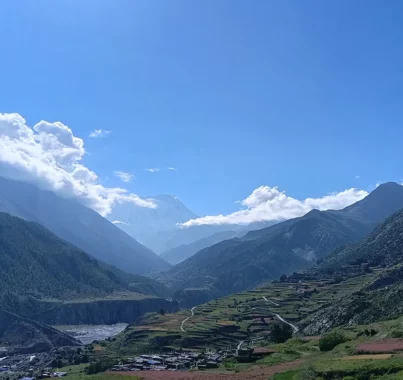
The Dolpo region is genuinely the Shangri-la of your dreams, nestled between the Dhaulagiri region and the high Tibetan plateau. According to legend, Guru Rinpoche established the Upper Dolpo Trekking, a haven for pious Buddhists, with Everest Summit Treka and Expedition.
Trekking the Upper Dolpo is an experience of a lifetime. Trekking to the isolated and remote midwestern region of Nepal in order to comprehend and believe in the remoteness and the environment in its naturally untamed state. The majority of the area is undeveloped and unmapped, making it ideal for hikers seeking an alternative to the popular, tourist-heavy hiking routes.
Until 1989, trekkers were not allowed throughout the entire district. As a result, this area is among the oldest and best preserved in the world. Only a small number of geographers and anthropologists have previously investigated the area. Everest Summit Treks and Expedition obtained a unique permit to allow organized trekking parties to traverse the Upper Dolpo.
The Chure Himal range and Dhaulagiri (8,167m) form the eastern and southern skylines. For a very long time, Dhaulagiri was believed to be the highest mountain in the world! From upper Dolpa, the view of Dhaulagiri, Annapurna, and Kanjiroba is quite majestic.
Hiking the Upper Dolpo offers a close-up look at stunning mountains, historic monasteries, and crystal-clear lakes. In the Dolpo region, this tiny village of 5,000 people is home to some of the “highest residents in the world.” Upper Dolpo’s historic dwellings are 4,300 meters above sea level!
The last traces of the ancient Tibetan culture are found in the high, arid Dolpo valley in northern Nepal. Additionally, Dolpo is the only place on Earth where members of the ancient pre-Buddhist Bon Po faith continue to follow their religion. Time has been calm and still in Upper Dolpo for a very long time. The people of Upper Dolpo have no idea what life is like outside the mountains. Because of its remoteness from the outside world, this region’s customs and culture have endured.
There is more to Upper Dolpo Trekking than just admiring the vast vistas of the breathtaking mountains and learning about the traditions and culture of the past. You can see rare animals including blue sheep, snow leopards, mountain goats, and Himalayan Langurs.
During our tour, we will come across unique individuals, see an engaging culture, and pass by remarkable ancient primeval settlements. We will travel across the highlands, enjoy the tranquility and splendor of Shey Phoksundo Lake, and participate in spiritual pursuits at the venerable Shey Gompa.
The Dhaulagiri range in Upper Dolpo moderates the monsoons brought on by sea winds from the Gulf of Bengal. As a result, hiking in the is feasible all summer long. The full bloom of orchids, edelweiss, campanules, and forget-me-nots improves it considerably.
Trekking over this part of the Trans-Himalayan region is an unforgettable experience. Upper Dolpa Trekking with Everest Summit Treks & Expeditions provides you with just the right amount of excitement, adventure, fulfillment, and spirituality. Come experience it for yourself by trekking to this Himalayan nation’s untamed west.
Lower Dolpo Trekking is the trek’s alternate option.

You will be met at the airport and taken to your accommodation by an Everest Summit Treks and Expedition agent. Once you are in your hotel, you can relax, visit Thamel, and buy any supplies you will need for the hike.


We will take a one-hour flight from Kathmandu to Nepalgunj. You can tour this energetic city or spend the evening in your hotel after a long day.

We will fly to Juphal from Nepalgunj; the flight will take approximately thirty-five minutes. We will meet our hiking team when we arrive at Juphal, and we will stroll through the tight canyon and the verdant terraced fields beside the Bheri River. We will arrive at the sizable settlement of Dunai after three hours of hiking, where we will spend the night.
We will head west from Dunai after crossing the suspension bridge. We will follow the latter and head north at the confluence of the Thuri Bheri and Suli Gad rivers. With the sound of the river thriving in the background, we shall trek up gradually. We will walk through millet, pumpkin, marijuana, and potato fields. Until we reach the small village of Hanke, we will continue to stroll along the river. It is the gateway of Shey Phoksundo National Park. We will go through Rahagaon and Parela on our way to Ankhe. What is interesting is that these names are for the eyes, lashes, and eyebrows individually.
The hike gets a little trickier from here. We will hike uphill over a narrow, steep track after crossing a receding river on a well-built bridge. From there, we will descend down the river for a while before ascending again to take in the breathtaking view of the surrounds. Maybe we may camp by the Suligad River.
Early in the morning is when we shall begin. The first several hours of the walk will be quite simple. The descent from Sumdo will be steep. We will ascend a 3,875-meter peak from where we will get a breathtaking view of Phoksundo Lake and the largest waterfall in Nepal, which is 300 meters high. To get to Phoksundo Khola and the lovely community of Ringmo, which is adorned with its mud-plastered Chortens and Mani walls, we will descend through lovely birch woodlands. The village is full with life and vitality. We will set up our campsite on the banks of Phoksundo Lake after a short walk from here.
We will follow the daring path that is hung from a wooden walkway that is held up by pegs and hammered into rock crevices. In order to reach the bank of Shey Phoksundo Khola, where we will camp for the night, we will ascend sharply to 4,040 meters before descending to the valley’s bottom.
We will be walking barefoot across a few rivers! We shall travel north across the glacier valley. We will pass over striking vertical cliffs and uneven rock formations as the trail continues to get smaller and smaller. Naturally, we will cross the very old wooden bridge that connects the Phoksundo River to another unidentified river. From there the trail twists into a quiet gorge, we will reach sheep pasture territory after a lengthy, exhausting climb. We will reach another valley with a view of the daring Kang La Pass after a lengthy and exhausting trek to the summit. We are going to camp overnight for the night.
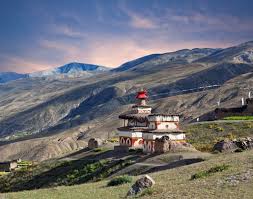
The walk today is particularly hard and draining. In approximately three hours, we will reach the 5,151-meter-high summit of Kang La Pass. The view from the top more than makes up for all the work. As we descend the steep valley bottom, we need to be much more careful. It will only take roughly 45 minutes. A magnificent crimson Chorten will greet you upon your arrival at Shey Gompa. We will camp for the night at the Shey Gompa compound after crossing an old log bridge.
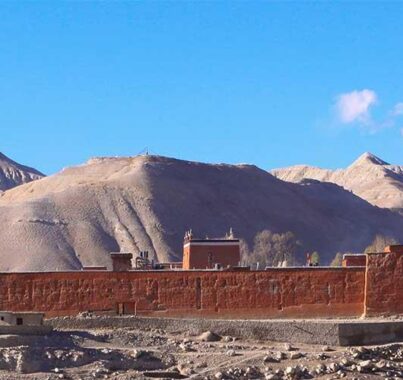
Shey literally means “crystal” in Tibetan. This monastery is also known as the Crystal Mountain. The Lama can bless us if we visit the Shey Gompa. We can visit the Tsakang Gompa to the west of Shey. It functioned as a meditation center for lamas during the Middle Ages. The monastery was built in the eleventh century.
Tibetan Buddhism and Bon Po, an ancient pre-Buddhist religion, coexist harmoniously here. We may explore the area and take a stroll later.
We will begin the day by hiking a pleasant path lined with juniper bushes. We shall climb to a gloomy, stony canyon. We will arrive at a level area that is ideal for a little picnic after following a winding path made of rocks and decomposed earth. We will arrive at the summit of the Saldand La Pass after twenty minutes of strenuous climbing. We can take in the breathtaking view of Mustang’s arid and coppery red environment from this location. After that, we will head north, which might be a long and exhausting journey. It will be pleasant to see the nomadic tents made of yak hair and the grazing yaks. You have now reached the Namduna Gaon, according to this indication. Here, we can see the Namgung Monastery, which is situated against the rock. There are only six dwellings in the village, and the fields on either side are terraced. The district’s primary crop, barley, is visible in the form of sprawling fields. We can go to the lovely monastery that was just constructed on the outside.
We will hike uphill when we leave the Namjung Valley. It starts with a lengthy and thrilling journey across the jagged highlands. Terraced fields of ripening crops may be seen at the valley’s base. After a while of climbing, we will descend to the lovely settlement of Salding, which is perched on a plateau far above the Nam Khong Nala River. It is the district’s largest village. It is a dry settlement on the Tibetan plateau of the Trans Himalayas.
Early in the morning, we will depart from Saldang and travel along the riverbank, via the terraced fields, stunning stupas, and Chortens. Along the trip, we can visit the Chaiba Monastery and see any Mani stones. We will pass via Namdo, a thriving community with 400 residents and 60 homes. We are welcome to explore the Namdo monastery and another monastery perched on the rock. Along the riverbed near the Sibu settlement, we will pitch our tent. We will spend the night at an overnight camp.
It will be a reasonably simple journey for the first several hours as you follow the decreasing river. We will cross another stream and head into a side valley after two hours. From there, it is a tough ascent. After that, we will come to a nice meadow, although it is best left rocky. We will spend the night in the overnight camp.
Today’s walking is made simpler by the compacted trail. However, it can get rather steep at times. The journey to the summit of Jeng La will barely take two hours. This location offers a breathtaking view of the Dhaulagiri Mastiff. In the few hours that lead us to Tarap Chu, we will arrive in a verdant valley following a strenuous descent towards the Tarap Valley. Tarap is a really magnificent valley, with expansive plains spanning 20 kilometers along the Tarap Chu on the flank of snow-capped mountains. We can tour the Gompas and Chortens once we arrive in Tokyu Gaon. We can stay overnight on the grounds of Tokyu Monastery. The Chaiba sect owns the monastery.
Today’s trail is wide and reasonably easy. We will stroll across the fields and observe the men and ladies working hard to harvest the crops. Additionally visible are the Mani Walls and Chortens, many of which are currently in need of renovation. Magars and a small number of Tibetans make up the majority of the population of Tarap village. The locals are Buddhists or Bon Po. Here, we can visit the Gompa and get blessings from the local Lama. The place will have an overnight camp where we will spend the night.
After crossing the Tarap Khola, we shall descend. On the journey, we shall traverse the narrow gorges. We may even spot yaks, blue sheep, and people grazing their goats and yaks. As we get away from the river, the path will become more heaved. We shall traverse a contemporary suspension bridge. In several areas, the route will become extremely narrow. An overnight camp will be where we spend the night.
We are going to keep going down the Tarap River canyon. We will walk on a variety of pathways today, from wide and smooth to quite steep and small. Additionally, we will mount the flights of man-made staircases, which require caution. Under the shadow of large trees, our campsite will be a lovely and peaceful meadow. An overnight camp will be where we spend the night.
We will be walking down the river, occasionally upward and occasionally downhill, leaving Khani Gaon and the mountains in the background on a recently constructed suspension bridge. The trail can occasionally be more difficult, and we will also use wet stepping stones to cross one of the rivers!
We will mostly climb down, leaving the crazy adventures of the excursions back up there. To get to the village of Dunai, we shall stroll alongside the resonant Bheri River. We have now finished the stunning Dolpo circuit. After arriving, we will rest before exploring.
We shall return to Juphal, a little town. The track is wide and level at the beginning, but it gets steeper as we climb higher. An overnight camp will be where we spend the night.
On the same day, we will board the two planes. We will take a 35-minute flight to Nepalgunj then a 60-minute flight from Nepalgunj to Kathmandu. After that, it will be time to bid them farewell. I hope to see you again!
Our company representative Everest Summit Treks & Expedition will take you to the airport approximately 3 hours before your scheduled flight. On your way home you’ll have plenty of time to plan your nearest next adventure and explore the most magnificent mountains of Nepal.


The best seasons to visit Upper Dolpo, like much of Nepal, are spring (April to May) and fall (October to November), when temperatures are comfortable, skies are clearest, and the likelihood of snow at high elevations is low. In April and November, this route may be impacted by late or early snow, which could make it impossible to cross several of the passes. Shey Phoksundo National Park, Phoksundo Lake
Upper Dolpo, trekking is regarded as challenging. Steep climbs, three passes over 5000 meters, many nights above 3500 meters, and some lengthy trekking days lasting six hours or longer are all part of the experience. Rest days are advised because the physical difficulty and pain of hiking in Upper Dolpo are increased by the fact that this is a tented trek.
If this is your first trip in Nepal, this is not a trek for beginners. However, both seasoned hikers and returning tourists to Nepal will find it to be a worthwhile challenge.
Due to the difficulty of finding lodging and food supplies along the trail, the majority of Upper Dolpo treks are fully-catered camping excursions. (Food shortages are reported to occur in Upper Dolpo.) In certain villages, there are some rudimentary teahouses or lodges, however these should not be trusted.
When trekking in Upper Dolpo (and elsewhere in Western Nepal, generally), it is recommended to bring as many food items as possible. Your dietary needs will be met if you are taking part in an organized trek, which is crucial in Upper Dolpo. The fact that resources are limited and that refilling provisions can be difficult for porters and guides in this area should still be kept in mind.
Upper Dolpo permits are costly and rigorously enforced. Additionally, you must get a permit for Lower Dolpo, which you cross en route to Upper Dolpo. Furthermore, only 250 foreigners are allowed entry into Upper Dolpo annually.
$10 USD per week for Lower Dolpo
$50 USD per day (10-day minimum) in Upper Dolpo
The entrance cost to Shey-Phoksundo National Park is Rs. 1000. Since trekking in Upper Dolpo requires a guide, your tour operator will arrange for all permits, and these costs are typically covered by the overall cost of your trip.
You can also choose to do shorter versions of the Upper Dolpo trek. Trekking from Juphal to Lake Phoksundo and back, which takes about eight days, is one shorter option. To the east, Dolpo is connected to Mustang and/or the Annapurna region via other variations.
The Dolpo to Rara Traverse via Shey Gompa is yet another variant. It is roughly the same length as the standard Upper Dolpo trek, with the exception that it ends at Rara Lake in the districts of Jumla and Mugu and diverges at Shey Gompa. The largest lake in Nepal, it is well known for its diverse array of birds.
Looking out of Dolpo from one of the passes
Compared to other regions of Nepal, access to western Nepal is more challenging due to its isolated location. To go to Juphal in the Dolpo district, you must first travel to Nepalgunj, which is on the plains.
The majority of travelers take flights from Kathmandu or Pokhara to Nepalgunj. You then take a plane to Juphal from Nepalgunj. (Direct flights from Kathmandu to Juphal are not available, although costly charter flights from Pokhara can be booked.) The majority of planned itineraries depart from Kathmandu via air. Remember that Juphal’s airport is merely a small mountain airstrip, and inclement weather frequently causes aircraft delays.
Although it is a lengthy journey from Kathmandu or Pokhara, Nepalgunj is also reachable by road. Although Western Nepal’s roads are getting better, Juphal is still a few days’ walk from the closest roadhead.
Our Upper Dolpo Trek 23 -day trek does not include travel insurance in Nepal. You need to purchase it yourself. If you don’t know good travel insurance companies, our tour company, Everest Summit Treks and Expedition, will also help you select the right option that covers all the required risks and needs while traveling.
You are required to have travel insurance compulsorily. Your insurance will cover your extra possible expenses, such as accidents, injuries, treatment, medical expenses, emergency helicopter rescue, theft, damages, etc., that can ruin your trekking experience completely. This travel insurance will enhance your trekking experience without making you worry about potential unexpected additional expenses.
