




Trip booking for 2025 and 2026 is open, you can book any trip from our website.





254 reviews in Tripadvisor


Duration
5 Days
Difficulty
Easy
Group Size
1-15 People
Max Altitude
3,100m. / 10,171ft.
Best Season
Spring & Autumn
Activity
Bhutan tour
Meals
Breakfast, Lunch & Dinner
Accommodation
3 Star Hotel
We begin our Five-day journey of Bhutan by landing at the Paro airport on Druk Air. Among all mountain flights, this one is among the most breathtaking. Every flight, whether from Kathmandu or another location along the Himalayan range, is an amazing achievement that provides an exhilarating drop into the Kingdom of Bhutan. Our agent meets you at the airport and takes you to Thimphu, the contemporary capital of Bhutan.
You will have ample time to tour Thimphu, the capital. The following day, we travel 75 kilometers via the 3000-meter Duchula Pass to Punakha. From Duchula Pass, you may see the snow-capped mountains and pause for tea or coffee. To see the stunning Punakha Dzong, keep driving to Punakha. As the region’s administrative and religious hub, Punakha Dzong has been significant to Bhutan’s history.
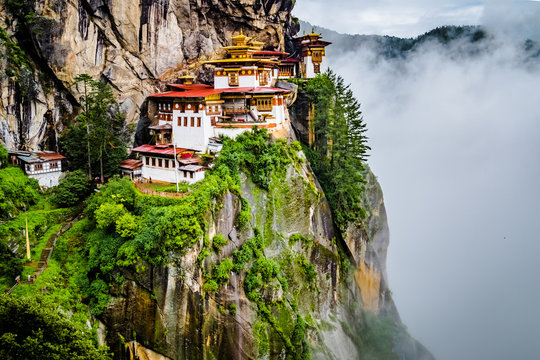
The round-trip hike to Tiger’s Nest Monastery takes roughly five hours. Visit to Taktsang Monastery, also called Tiger’s Nest Monastery, which is located on the Taktsang Valley hill. The most well-known monastery in Bhutan is Tiger’s Nest Monastery. You will have enough time to see the National Museum of the Bhutanese Kingdom, the Farmhouse in Paro, and the revered Ringpung Dzong.
The purpose of the Five -day Bhutan trip package is to see the country’s highlights. The major historical cities and rural locations are explored on this cultural tour. The tour’s primary features include Paro, Thimphu, Punakha, the hike to Tiger’s Nest Monastery, and the stunning Punakha Dzong. The most popular tour in Bhutan is the 5-day excursion. The main dzong, the most well-liked Taktsang Valley hiking route, the neighborhood farmer’s market, and a farmhouse where you may have a traditional hot stone bath are all on your itinerary.

Tashi Delek and welcome to Bhutan. Our local representative will greet you at the only international airport in Bhutan that is located in Paro(2262m), Western Bhutan. Later we will head to Thimphu (50km, about 1.5h) via the sightseeing to Tamchog Lhakhang Iron Bridge, Buddha Dordenma Statue, National Memorial Chorten, or Bhutan Post Office Headquarters if time permit. Then check in at your sweet hotel in the capital city for a good rest while getting used to the time difference.
Tamchog Lhakhang (Tachog Lhakhang, Tamchog Lhakhang Iron Bridge) is located by the Paro river on the way to Thimphu from Paro. To get to the temple we must walk across a unique iron chain bridge with colorful fluttering prayer flags. Both the Lhakhang and the iron bridge are built by the saint Thangthong Gyalpo (1385-1464, Tibetan polymath). As the “King of the Empty Plain”, Thangthong Gyalpo is now commonly known as the “Iron Bridge Maker”. Enjoy his pioneering old-aged buildings left till today.
Buddha Dordenma Statue (Kuenselphodrang, Buddha Point) is a landmark of Thimphu city and you can have a great view of the Thimphu Valley there. With 51.5m in height, built of bronze and gilded in gold, the statue is famed as the largest sitting Shakyamuni statue in the world and there are 125,000 smaller Buddha statues placed within it. The statue was finished in 2015(built for 9years) to fulfill an ancient prophecy to emanate an aura of happiness and peace all over the world.
National Memorial Chorten is the most visited landmark of Thimphu which was built in 1974 in memory of the Third King, His Majesty Jigme Dorji Wangchuk(the Father of Modern Bhutan) by his mother. Due to the idea of Jigme Dorji, this stupa is dedicated to world peace and prosperity. It is a Tibetan-style chorten with amazing paintings and brilliant sculptures, you can see the classical stupa pattern like the pyramidal pillar crowned by a crescent moon and sun. It is also a good place to meet local Bhutanese people circumambulating the Chorten throughout the day in a clockwise direction for praying.
Bhutan Post Office Headquarters (the General Post Office) is located near Changlam Square in Thimphu. It is home to the world’s largest photo book and the most interesting collection of Bhutanese stamps. Only in this post office, you can get your personalized stamps (the stamp of your face). Great surprise to send your family and friends a postcard with your face on the stamp! (Open from Monday to Saturday from 9:00 to 17:00 during Summer and 9:00 to 16:00 during Winter. Do note that it is closed for lunch from 13:00 to 14:00).
* Breakfast, lunch & Dinner
* Accommodation


In the morning, we will explore Bhutan’s capital city Thimphu through Takin Sanctuary, Folk Heritage Museum, School of Arts and Crafts, and Trashichho Dzong. After sightseeing in Thimphu (2360m), we will drive to Punakha (74km, about 2.5h) via Dochula Pass. Then have a good rest in your hotel.
Motithang Takin Preserve (Takin Sanctuary, Takin Zoo) is a wildlife reserve area for Takin (Budorcas taxicolor), the national animal of Bhutan. Drukpa Kunley (Divine Madman), the famous Tibetan saint, is said to be responsible for the creation of this unique creature called Takin which has the head of a goat and the body of a cow.
Folk Heritage Museum (Phelchey Toenkhyim) was established on July 28th, 2001 with the initiative of Her Majesty Ashi Dorji Wangmo Wangchuck (the Queen Mother of Bhutan). It is set inside a three-storied, 19th-century traditional house and provides visitors with a glimpse of the traditional Bhutanese lifestyle, artifacts from rural households, collection of typical household objects, tools, and equipment. The museum also organizes regular demonstrations of rural traditions, skills, habits, and customs as well as hosts educational programs for children.
School of Arts and Crafts (Thimphu National Institute for Zorig Chusum), established by the Government of Bhutan in 1971, is an institute that nurtures exemplary craftsmanship in Zorig Chusum (13 Arts and Crafts). In the Institute, thirteen skills are taught to students. These thirteen art forms are Traditional Painting (Lhazo), Sculpturing (Jinzo), Wood Carving (Shagzo), Calligraphy (Yigzo), Papermaking (Dezo), Bronze Casting (Lugzo), Embroidery (Tshemazo), Weaving (Thagzo), Carpentry (Parzo), Masonry (Dozo), Bamboo and cane weaving (Tshazo), Gold/Silver Smithy (Trozo), Black smithy (Garzo).
Tashichho Dzong (Thimphu Dzong) is located on the right side of the Wangchu River in the northern part of Thimphu city. As the “Fortress of the glorious religion”, it houses the throne room of His Majesty the King, government offices, and the central monk body. Thimphu Dzong was initially erected in 1641 and rebuilt by King Jigme Dorji Wangchuck in the 1960s. There are two main entrances in the Tashichho Dzong. One leads to the administrative section to the south and the other one (at the north) leads to the monastic quarter where festivals and dances are performed.
Dochula Pass (108 memorial chortens) is a place in honor of 108 Bhutanese Soldiers, there are 108 stupas called the “Druk Wangyal Chortens” representing each soldier’s life that was lost in the war of December 2003. The pass is decorated with colorful prayer flags which are symbols of veneration and the best wishes for peace and prosperity for Bhutan. If the weather is good, the Dochula Pass will become the best platform to get breathtaking views of the snow-covered Himalayas.
* Breakfast, lunch & Dinner
* Accommodation
In the morning, we will visit Khamsum Yueley Namgyal Chorten and Punakha Dzong. Then it is time for us to drive back to Paro from Punakha (115km, about 2.5h) via a visit to the Chimi Lhakhang. After check-in at the hotel in Paro, you can have a rest.
Khamsum Yulley Namgyal Chorten is on the west bank of the Mo Chhu river. After across a suspension bridge, it is about 45mins’ walk from the main road to the Chorten(stupa). The stupa was built in 1990 by Ashi Tsering Yangdon Wangchuck(the mother of the 5th King Jigme Khesar Namgyel Wangchuck) to drive off evil forces and bring peace to Bhutan and the world. This Chorten was a typical combination of the art, architecture, and traditions of Bhutan. It took Bhutanese carpenters, painters, and sculptors 9 years to finish this Bhutan-style pagoda. Also, you will get an excellent view of the Punakha Valley and Punakha Dzong there.
Punakha Dzong stands at the junction of two great rivers called the Pho Chu river (father river) and Mo Chu river (mother river). As the palace of great happiness or bliss, it is also known as the most beautiful Dzong in Bhutan. It was first built in 1637 by the founder of Bhutan, Shabdrung Ngawang Namgyel, and was played as the administrative center and the seat of the Bhutanese official till the capital city was moved from Punakha to Thimphu in 1955. Now, this Dzong is served as the winter residence for Je Khenpo, Chief Abbot of the Central Monastic Body. In 2011, the Dzong witnessed the royal wedding ceremony of the 5th Bhutan’s King, His Majesty Jigme Namgyel Wangchuck to Queen Jetsun Pema. If you visit Bhutan in May, you will be amazed by the breathtaking purple-blue jacaranda blooms outside the fortress.
Chimi Lhakhang (Fertility Temple, Chime Lhakhang) is located on a hillock among the rice field and is a pilgrimage for a childless couple to seek blessings. The monk there blesses the couple with a wooden phallus that is believed to have the power to help the childless couple conceive a child. This temple is associated with the famous Drukpa Kunley (1455-1529, Divine Madman, Tibetan saint), who is famed for using his phallus to guide people to enlightenment and subdue demons. That is why you can see the symbol of phalluses scattered everywhere. You can buy handicraft souvenirs here with the phallic symbol in various colors, shapes, and sizes.
* Breakfast, lunch & Dinner
* Accommodation
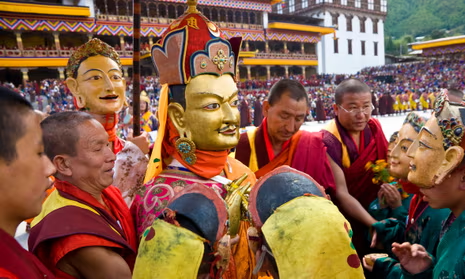
Today we will drive from Paro city to the start point of the hiking route of the Tiger’s Nest Monastery. It takes about 2.5 hours to reach Tiger’s Nest by foot (5 hours for a round trip), and you can have a rest at the view terrace which is located at the halfway point of the hiking road. Also, you can choose to ride a horse(self-paying) from the camp base to the Taktsang Cafeteria (lunch spot). Then visit Ta Dzong after trekking. Farewell dinner with Bhutan Culture Dance Show in Paro.
Tiger’s Nest Monastery (Taktsang Goemba, Takhtsang Lakhang, Paro Taktshang), first built in 1692, is the iconic landmark of Bhutan. As a world cultural heritage, it is sited on the side of a cliff at a height of 900m above the Paro valley. It is said that Guru Rinpoche (a Buddhist saint) rode a tigress to the current site of the monastery and meditated in a cave for 3 years 3 months and 3 days. Now it is one of the most visited tourist attractions in Bhutan and a sacred religious site for Bhutanese to pilgrimage at least once in a lifetime.
National Museum of Bhutan (Ta Dzong) is famed as Bhutan’s tallest building (a cylindrical structure), which is 22 meters (72 feet) high and has 6 floors. It was completed in 1649 as a watchtower on the hill above the Rinpung Dzong (Paro Dzong). It was converted into the National Museum of Bhutan in 1968 with a rich collection of ancient artifacts like pottery, armor, thangkas, masks, stamps, photos, statues, costumes, relics, stone axes, and religious paintings…
* Breakfast, lunch & Dinner
* Accommodation
Time to say goodbye to Bhutan, the beautiful Himalayan country. Our local representative will meet you at your hotel and send you to the international airport. Happiness is a place, wish you get happiness and great memories from the Bhutantrip with us. We look forward to seeing you again, Tashi Delek!

Kathmandu
Bhutan

Bhutan Visa: In order to enter Bhutan, all international travelers must have a valid visa. Once your tour has been confirmed, the Bhutanese government will grant the visa, which your tour operator in Bhutan will request for on your behalf.
Every visitor to Bhutan must pay the Bhutan Tourism Council a daily fee. Your lodging, meals, transportation, and an official guide are all included in this price. The cost varies according to the season and the kind of lodging you select.
In order to enter Bhutan, you will require an entry permit. After your visa is accepted, Dream Tibet Travel will get this permit for you.
If you plan to travel to certain areas of Bhutan that are designated as “restricted,” you will need a RAP. We will obtain this permit for you as per your requirement
The cost of the bhutan tour is starting from USD 1250.00 per person depend on the Hotel catagories. The cost is on base of 3* standard Hotel basis Including Visa fee and SDF. You can upgrade the hotel in Bhutan as per your requirement and comfort.
March through June and September through November are the ideal times of year to visit Bhutan. With beautiful skies and comfortable temperatures for outdoor activities, these are the busiest travel seasons.
The official currency of Bhutan is the Bhutanese ngultrum (BTN), but the Indian rupee is also widely accepted.
Every traveler to Bhutan needs a visa, which can be acquired from a Bhutanese travel agency or tour operator. The cost of the excursion includes the visa fee.
Although English is widely spoken among Bhutanese, particularly in tourist regions, Dzongkha is the country’s official language.
The capital city of Thimphu, the Paro Valley, the Punakha Dzong, and the Tiger’s Nest Monastery are a few of the must-see locations in Bhutan.
Red rice, ema datshi (hot cheese and chili stew), and momos (steamed dumplings) are among the main dishes of Bhutanese cuisine, which is greatly inspired by Tibetan and Nepalese cooking techniques.
Due to its low crime rate and hospitable, friendly citizens, Bhutan is regarded as a safe destination for tourists. But like with any place, it is vital to be mindful of your surroundings and take measures.
Although some upscale hotels and restaurants in Bhutan accept credit cards, it is still preferable to have cash on hand for the majority of transactions.
Although there are not any particular vaccinations needed to enter Bhutan, it is a good idea to make sure you have all the essential shots by consulting your doctor before you arrive.
Indeed, Bhutan is renowned for its dedication to protecting the environment and encouraging eco-friendly travel. While touring the nation, tourists are urged to consider how their actions affect the ecosystem.
