




Trip booking for 2025 and 2026 is open, you can book any trip from our website.





254 reviews in Tripadvisor


Duration
11 Days
Difficulty
Moderate
Group Size
1-15 People
Max Altitude
5,320m. / 17,454ft.
Best Season
Spring & Autumn
Activity
Trekking
Meals
Breakfast, Lunch & Dinner
Accommodation
3 Star Hotel
The Nar Phu Valley Trek is a remarkable journey across Nepal’s unexplored and isolated Annapurna highlands. Narrow canyons, verdant woods, striking rock formations, and the majestic Kang La Pass are all part of this exceptional trekking adventure. This trek, often called the Hidden Valley Trek, provides unmatched views of snow-capped peaks, historic Tibetan culture, and stunning alpine scenery. The Nar Phu Valley Trekking is quickly rising to the top of Nepal’s trekking packages, making it the perfect choice for anyone looking for a full teahouse trekking experience.
The itinerary for the Nar Phu Valley Trek Start your journey with a picturesque drive to Khudi, the starting point of this incredible journey. Admire the magnificent Himalayan giants, such as Machhapuchhre, Manaslu, Dhaulagiri, and Lamjung Himal, along the trek. Autumn and spring are the ideal seasons for this journey because of the bright skies and breathtaking vistas. Through vivid Tibetan chortens, scenic valleys, and high-altitude communities, this hike promises to be both difficult and rewarding.
Finally, for an immersive experience exploring hidden valleys, sign up with Everest Summit Treks and Expedition. Stay overnight at the Nar Phedi monastery and interact with the Phu locals. Explore Buddhist monasteries and Hindu temples at Muktinath, experience the unique Tibetan culture, and ascend the highest pass in the world. Far from the typical trekking routes, our skillfully designed trekking tour in Nepal provides peace, less-traveled paths, and remarkable encounters. Let us take care of the rest and fulfill your trekking fantasies if you have a strong will and a healthy body.

One of our representatives Everest Summit Treka and Expedition staff will meet you near the airport exit gate with a placard for accurate identification after you have completed the immigration procedures and arrived in Kathmandu. After that, you will be taken to your designated hotel room, where you can unwind and stretch your legs to get your energy back in case you are experiencing jet lag. If you arrive early, you can spend the evening strolling through Thamel’s streets, shopping for anything that could catch your eye, or just lounging at a pub or music bar while listening to your favorite music and drink.


After a filling breakfast at your hotel, you will go on a guided tour of some of the city’s most revered and historic sites that are recognized as UNESCO World Heritage Sites. A trip to the revered Hindu temple of Pashupatinath, the lofty monkey temple at Swayambhunath, the Buddhist shrine of Bouddhanath, which is home to one of the biggest stupas in the world, and the charming Basantapur Durbar Square will leave you with unforgettable memories for a long time. You will meet your trip manager, fellow trekkers, and staff members when you visit our office later in the afternoon. Before you return to your hotel, your tour leader will check your equipment, give you a quick overview of your forthcoming trip in the Mardi Himal region, and ask you any questions you may have.

It takes about 8 to 9 hours to travel from Kathmandu to Koto in a local jeep, which takes you from the busy Nepalese city down the picturesque Prithvi Highway, past the Marsyangdi River, and into the heart of the Himalayas. You will journey through charming settlements like Besisahar, Syange, and Dharapani if you leave early. The road gets rougher and the scenery more spectacular as you pass terraced farms, verdant forests, and peaks covered in snow. You will pause for food and drinks at neighborhood restaurants along the route, taking in the breathtaking scenery and diverse cultural experiences. The journey ends in the tranquil village of Koto, which is tucked away at 2,600 meters as you travel into the Annapurna region. Here, you may relax in a basic lodge while taking in the stunning mountain scenery.
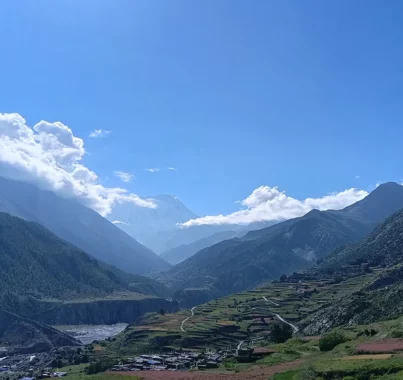
Trekking from Koto to Meta Village is a strenuous but worthwhile experience that immerses you in the isolated Nar Phu Valley, which is renowned for its untamed beauty and maintained Tibetan culture. At an elevation of around 2,600 meters, the trail begins in Koto and travels in a steep, winding manner through thick pine forests and beside the thundering Phu Khola River. As you climb, the scenery changes to a striking combination of old, prayer-flag-draped chortens, rugged cliffs, and tumbling waterfalls. Careful traversal of the rough terrain, which includes multiple suspension bridges and steep ascents, is necessary for the about six to seven-hour walk. At 3,560 meters, Meta is a small, windswept community that provides breathtaking views of the surrounding peaks and an insight into the customs of the local residents, who are heavily inspired by Tibetan culture. A remarkable portion of the Nar Phu Valley walk is the hike to Meta, which is both physically demanding and culturally immersive.
After breakfast at the campsite, you will start your journey via barren chortens, prayer flags, and birch trees before climbing steeply to an abandoned Khyang hamlet. This is the village where the lovely long Mani wall is located, where Phu residents typically relocate during the harsh winter months. You will gradually descend to the riverbank after following an amazing pebbly trail that is built into a cliff above the river. From there, you will continue on via mani chortens down the riverbed. After that, you will ascend to Phuohi Yalgoe’s entrance, which is regarded as the entryway of the Phu Valley, the brightest hilltop settlement. After an hour of hiking, you will cross the Phu River and begin climbing through perplexing caverns to reach Phu Village.
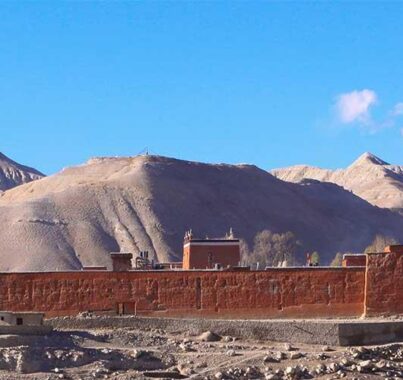
The goal of this day is to allow the body to adjust to the greater elevations in the next trekking days. The long drive to Phu is not worth anything if you do not witness the village’s natural beauty and cultural diversity. The Lamas, Gurungs, and Ghaleys are among the many ethnic groups that thrive in the Hidden Valley of Phu. You will have ample opportunity to explore Phu village and its environs, which include a sizable Buddhist monastery. Another option is to walk to the Himlung Himal Base Camp or do the short, easy trip to Lhakhang Monastery, an old Buddhist gompa believed to be the last monastery constructed by Karma Rinpoche, to adapt yourself to the walk the next day.
Trekking through the isolated and untamed terrain of the Nar Phu Valley Trek from Phu Village to Nar Phedi is an enthralling experience. The trek begins at the historic and culturally significant Phu Village, which is tucked away at an elevation of about 4,050 meters. It then gradually descends before crossing the Phu River. With its sheer cliffs, deep gorges, and panoramic views of the surrounding Himalayan peaks, the path goes through arid, windswept landscape. The walk is a physically taxing yet worthwhile experience because it requires traversing narrow routes dug into the mountainside and crossing multiple tiny streams. After several hours of hiking, you arrive to Nar Phedi, a tiny community at an elevation of about 3750 meters, where a modest monastery offers limited lodging. With the sounds of nature and the austerity of monastic life offering a sharp contrast to the majesty of the surrounding surroundings, Nar Phedi’s tranquil and remote setting makes it a pleasant haven.
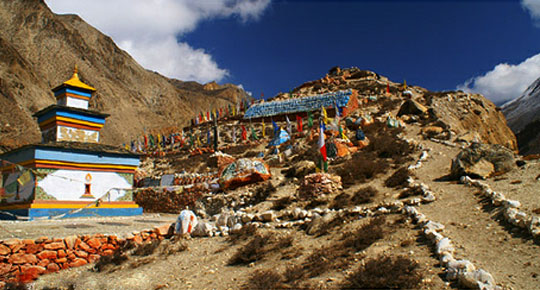
We start the day with a quiet meditation at the monastery, where we wake up to the calming scent of juniper leaves that the monks had burned. Following the 20-minute morning Puja ceremony, we eat a delectable breakfast that the monks have prepared for us. We set out on a two-hour ascent to the Chortens with reenergized bodies and full appetites, rewarded by breath-taking views of the Phu Valley and the Himalayas. After another 3.5-hour hike, we arrive in the quaint Nar Village, where we spend the afternoon touring historic monasteries, getting to know the local way of life, and taking in the breathtaking views.
The journey from Nar Village to Ngawal is a demanding but worthwhile one. Offering sweeping vistas of the surrounding Himalayan peaks, the trail weaves its way higher towards Kang La Pass after a difficult ascent. Physical stamina and appropriate acclimatization are required due to the high altitude. Trekkers are rewarded with a stunning descent into the Ngawal Valley after conquering the pass. This isolated area offers opportunity to interact with native nomadic herders, as well as unspoiled scenery and traditional settlements.
You will go to Kathmandu in a Local jeep after breakfast. After eight to nine hours of driving via Beshisahar, you will reach Kathmandu.
One of our agents will drop you off at the airport well in advance of your planned flight time. You might want to independently see some of Kathmandu’s historical attractions if your flight is in the evening. However, Everest Summit Treks & Expedition is always prepared to arrange another fantastic Himalayan vacation if you would like to prolong your vacation in Nepal.


At Kathmandu, you will stay at three-star hotels. We will be lodging at lodges or teahouses during the hike. Until you reach higher elevations, where the accommodations are more basic with only the essential requirements, you may find more comfortable and better-quality teahouses with adjacent bathrooms at lower levels.
While breakfast is included in your hotel stay in Kathmandu, all meals—breakfast, lunch, and dinner—will be served while trekking. Tibetan bread, Sherpa stew, buckwheat, potatoes, and oats are essential foods in the Manang and Mustang regions. When the first potato seedlings were sent to the area in the early 1990s, Sherpa’s began growing potatoes. At higher elevations, the food options are more limited and mostly consist of potato meals. Carbohydrates, which are abundant in potatoes, are a great source of energy that is required at high elevations.
We take a private vehicle for sightseeing and for transportation from the airport to the hotel. During the walk, we take local busses or public transportation.
On this demanding journey, you could have to walk for six to seven hours each day. While it is necessary to have some prior hiking or trekking experience, it is generally helpful to have some familiarity with trekking. People of all shapes, sizes, and origins have come together on the journey. Dealing with altitude sickness and its possible physical implications is the only difficult part. Before leaving for Nepal, it is best to physically prepare yourself by boosting your oxygen intake and stamina.
The Nar Phu Valley Trek is a remote and unexplored trekking route in Nepal’s Annapurna area. It passes via Phu and Nar, two unexplored regions that were closed to tourists until 2002. The hike offers a glimpse into the little-known Tibetan culture in addition to breathtaking views of the Annapurna and Manaslu mountain ranges.
The Nar Phu Valley Trek’s length can change according on your walking pace and schedule. The average time to do the trek is between 10 and 18 days. This can be altered, though, based on your fitness level and personal preferences.
The Nar Phu Valley Trek is regarded as a difficult hike. The trail has some challenging sections, high elevations, and steep ascents. It is advised for seasoned hikers who are in good physical condition. It is imperative to have prior hiking experience and be acclimated to high elevations.
Spring (March to May) and fall (September to November) are the ideal seasons to complete the Nar Phu Valley Trek. Clear skies, mild temperatures, and consistent weather are all features of these months. Though the weather can be more difficult, the area is nevertheless reachable in the winter (December to February) and monsoon season (June to August).
Indeed, special permissions are required for trekking in the Nar Phu Valley.The necessary permits are the Nar Phu Restricted Area Permit (USD 100 for the first week and USD 15 per day for each extra day) and the Annapurna Conservation Area Permit (ACAP), which costs USD 30
Yes, there are basic tea shops and lodgings along the Nar Phu Valley Trekking path. However, the facilities and accommodations could be more basic and limited when compared to other popular trekking routes in Nepal. Having a sleeping bag and extra food on hand is a smart idea in case resources are limited.
Proper trekking equipment, warm clothes, a decent pair of hiking boots, a backpack, a sleeping bag, a water bottle, a first aid kit, sunscreen, and a cap are some of the things you must need for the Nar Phu Valley Trek. Additionally, since there might not be many ATMs in the area, it is a good idea to have extra cash on hand.
The highest point on the Nar Phu Valley Trek is Kang La Pass, which is approximately 5,320 meters above sea level. Adopting the right safety precautions and properly acclimating are essential to preventing altitude sickness.
It is possible to combine the Nar Phu Valley Trek with other Annapurna region treks. Starting the journey from Besi Sahar and continuing on to the Annapurna Circuit Trek or the Tilicho Lake Trek is a well-liked choice. This combines the distinctive Nar Phu Valley Trek experience with further exploration of the breathtaking Annapurna region.
